On Portals
My love of portal fantasy is no secret; I’ve had it from little girl, when I was (apparently) obsessed with Alice in Wonderland. It took me through the wardrobe, it dropped me on the top of Kevin’s Watch, it travelled me through that timegate to the Pliocene. It introduced me to Jon-Tom and Clothahump, and it opened the door for Ecko, tumbling him from the roof of the Manhattan City Gardens and landing him in the Varchinde (plus it made Lugan do an awful lot of drugs). More recently, it found for me the sea-filled labyrinth of the House, and its booming, tidal halls.
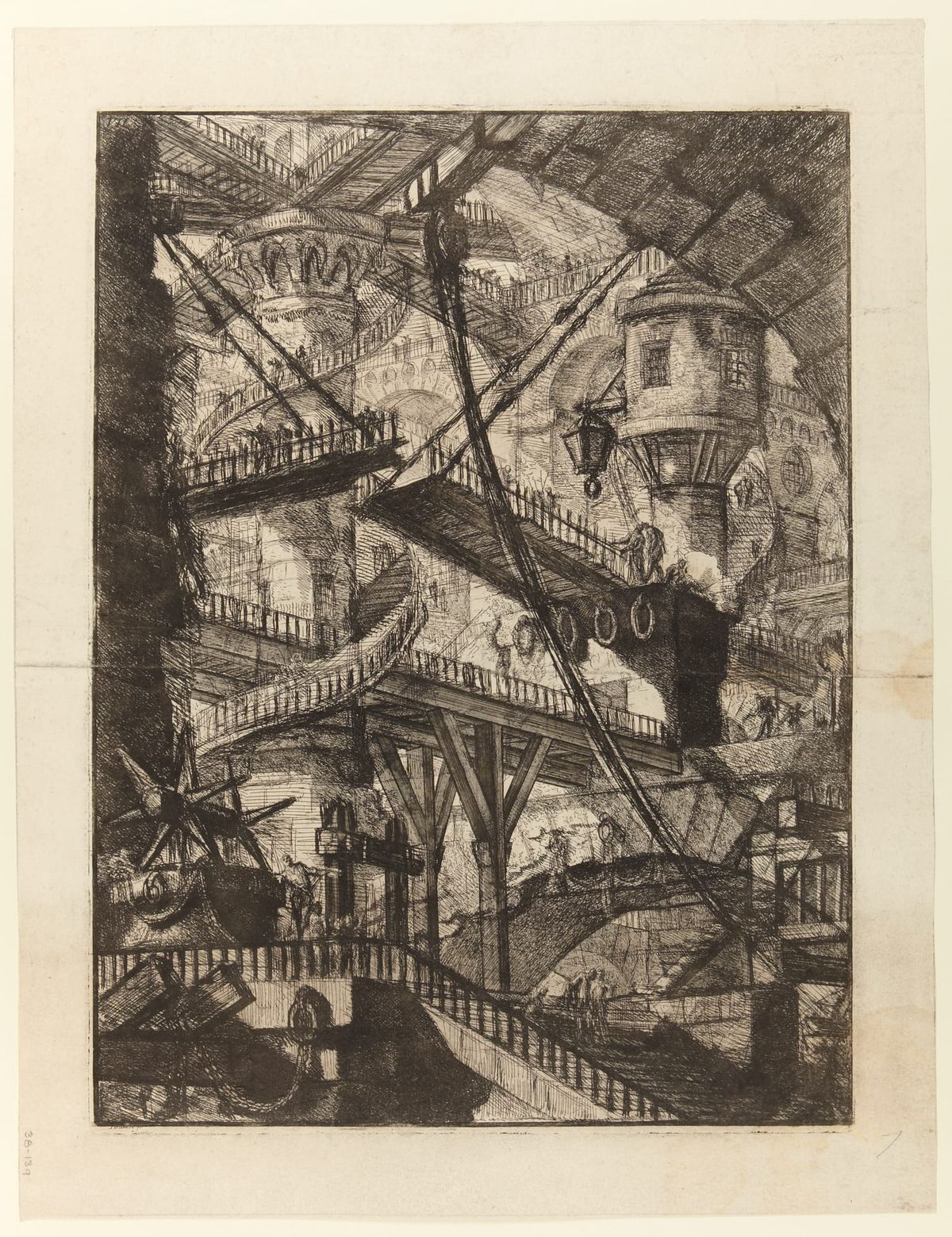
There are many essays that explore Clarke’s novel, discussing the nature of Piranesi himself, his imprisonment (from Giovanni Battista Piranesi's 'Carceri'), his acceptance, his oblivious innocence. Likewise, they talk about the House's liminal space, its absence of time, and how Piranesi forgets it, living only in the present.
But it was the nature of the portals that stuck with me, the way that Piranesi (the fictional one), by the end of the book, accepts both worlds, and learns to travel from one to the other. And, as I was walking around the M C Escher display at Somerset House yesterday, I found an immediate, visual and emotional correlation between the House and Relativity, and the thought that those well-known artworks are absolutely the portals that Clarke describes.
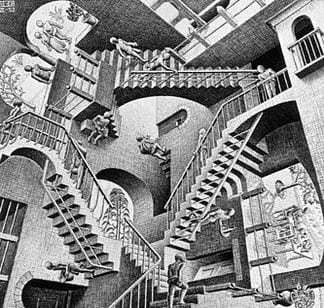
They don’t go to another world, but they can take us to another time, a time when the only thing that mattered was the present, a time when those same images were there, on the wall of my bedsit. My world was small, my responsibilities minimal, my obliviousness complete. It was a golden time, peaceful and glorious, and I miss it, miss the clarity of its imagination. Miss it, like it was that safe, enclosed, fantasy.
But Piranesi didn’t fully understand the House until he’d been back to reality. His vision wasn’t wide enough, and he didn’t understand it’s importance.
And is the same not true of us?
Yes, we have to grow up, of course we do. We can’t live in the House forever; we have to face reality. We have to deal with the big shit, because otherwise it deals with us. Yet it only makes those portals more important, be they a memory, a book, a place, a piece of music. An image, that’s an echo from one’s youth.
Because they take you back there, and they remind you that these places are never lost. And that you can absolutely move back and forth, and keep them both.
Reading: No Fair Maidens, A Wild Journey Through Memoir, Myth and Womanhood With the Lost Goddesses of Britain by Kim Willis. A random staffroom pick up, which I really thought I’d enjoy, but just left me a bit baffled. Some excellent research but VERY rambly, falling somewhere between autobiography, historical novel and mythological essay, and somehow managing to not get the best out of any of them. Not terrible, by any means (unless you include the word ‘warrioress’ which made me gag every time I read it), and I did get to the end, but honestly wound up wondering why I’d bothered.
Watching: Jessica Jones, and being absolutely bowled over by Carrie-Anne Moss who is stealing the show. She’s ruthless, brutal, gorgeous, filthy, atrociously behaved, and yet the depth of her character is incredible. You want to hate her -you’d have every reason – but you just can’t. Kristen Ritter’s great, but y’know.
Playing: Our intrepid D&D adventurers have landed on the Isle of Dread, and are now hacking their way through its jungle innards, seeking the usual list of fabled treasures (can’t possibly go wrong, obvs). The cat-people were friendly, the local sharks really weren’t, and how much fun can one really have with boiling tar?
No, don’t answer that.